
今天起,这些“传统习惯”均违法!《生态环境法典》今日正式施行!航运企业自查清单请速领。
一、航运业被彻底“重写”的4条规则
1. Four Rules Reshaping Shipping Compliance from Today
变革1:全域统一监管——没有“近海宽松、内河严格”了
Change 1: More unified regulation across all waters — no more assuming that coastal operations are lenient while inland waters are strict
法典进一步推动内河与海洋环保规则衔接,燃油标准、岸电要求、处罚尺度的协调统一将明显加强:
The Code further aligns the environmental regimes for inland and marine waters. Fuel standards, shore-power obligations and enforcement approaches will become significantly more coordinated:
• 燃油管理趋严:远洋船舶进入内河,应重新核验内河航区适用的燃油品质与排放控制要求,不能沿用原航区经验;
Tighter fuel controls: when an ocean-going vessel enters inland waters, recheck the fuel-quality and emission-control requirements for the inland navigation area concerned. Do not rely on practices followed in the vessel’s previous trading area.
• 岸电要求明确:法典及相关现行规定对具备岸电条件的船舶提出使用要求,内河、沿海、远洋船舶均应结合适用条件执行;
Clearer shore-power obligations: the Code and related rules require vessels to use shore power where the port and vessel meet the applicable conditions. Inland-water, coastal and ocean-going vessels must each comply with the rules relevant to their operations.
• 罚则衔接加强:对排污、冲滩拆船等违法行为的处罚进一步体系化,企业过去依赖地区差异或执法尺度差异的空间将明显收窄。
More consistent penalties: sanctions for unlawful discharges, dismantling vessels by beaching and other violations are now more systematic. The scope for relying on regional differences or uneven enforcement is narrowing rapidly. Enterprises will have far less leeway to exploit regional variations or inconsistent law-enforcement practices.
远洋船进内河,不能简单沿用海上航区经验。压载水、污水、台账、岸电等事项,都应按实际适用的规则逐项核对。
An ocean-going vessel entering inland waters cannot simply apply the compliance assumptions used at sea. Ballast water, sewage, statutory records and shore power must each be checked against the rules that actually apply to the voyage and operation.
变革2:全链条追责—— 一艘船出事,整条链追责
Change 2: Chain-wide accountability — one vessel incident can expose every participant
法典将监管延伸至船舶全生命周期,上下游主体环环扣死:
The Code extends regulatory oversight across the vessel’s entire life cycle, creating linked responsibilities for every upstream and downstream participant:
• 接收设施强制要求:港口、码头、修造厂必须配备并有效运行污染物接收设施,设施闲置或能力不足即面临2万至20万元罚款;
Mandatory reception facilities: ports, terminals and shipbuilding and repair yards must provide and effectively operate pollutant-reception facilities. Facilities that are idle or lack sufficient capacity may attract fines of RMB 20,000–200,000.
• 合作方资质锁死:从事污染物接收、清舱、洗舱的单位应具备法律法规要求的资质或处置能力;选择无资质合作方,船东、码头、服务商均可能面临相应法律责任;
Qualified contractors only: providers engaged in pollutant reception, hold cleaning or tank cleaning must have the qualifications or disposal capability required by law. Using an unqualified contractor may expose shipowners, terminals and service providers alike to liability.
• “一环违规,全链核查”:船、港、回收单位三方联动,任一环节出现问题,监管部门都可能沿业务链条追溯各方责任。
One breach can trigger a chain-wide review: vessels, ports and waste-reception contractors are interconnected. A problem at any stage may prompt regulators to trace responsibility through the entire service chain.
选错服务商,就是给自己埋雷。
Choose the wrong service provider and you create a compliance risk for your own business.
变革3:处罚力度全面升级——高额罚款、停航与责任限制风险并存
Change 3: A tougher penalty regime — substantial fines, operational suspension and limitation risks
法典重构处罚体系,罚款上限大幅提高;在故意、重大过失等特定情形下,海事赔偿责任限制能否主张也将成为重点问题:
The Code restructures the penalty regime and significantly raises maximum fines. Where intent, gross negligence or other specified circumstances are involved, the availability of limitation of maritime liability may also become a central issue:
事故罚款不再按比例计算:针对一般、较大、重大、特别重大事故分别设置明确区间,单次污染事故最高罚款2000万元;
Pollution-incident fines are no longer calculated using a percentage-based formula. Separate ranges now apply to general, relatively serious, major and particularly serious incidents, with a maximum fine of RMB 20 million for a single pollution incident.
常见违规罚款标准明确:
The penalty ranges for common violations are now clearer:
• 内河排污(倾倒垃圾、排放残油等):1万至10万元,造成水污染加罚至2万至20万元
Unlawful discharges in inland waters, including dumping garbage or discharging oil residues: RMB 10,000–100,000; where water pollution results, RMB 20,000–200,000.
• 压载水违规排放:2万至20万元
Non-compliant discharge of ballast water: RMB 20,000–200,000.
• 防污设备或证书缺失:5000元至5万元,逾期不改可责令停航
Missing pollution-prevention equipment or certificates: RMB 5,000–50,000; failure to rectify within the prescribed period may lead to suspension of the vessel’s operations.
• 码头接收设施不达标:2万至20万元
Substandard terminal reception facilities: RMB 20,000–200,000.
• 冲滩拆船:10万至100万元
Beaching-based ship recycling: RMB 100,000–1 million.
• 新增处罚情形:排放控制系统不合规、运输散装物料未采取扬尘防治措施等,均被纳入处罚范围;
Newly specified violations include non-compliant emission-control systems and failure to take dust-control measures when carrying bulk materials.
恶意排污、瞒报污染事故,可能影响海事赔偿责任限制的适用;生态修复费、第三方损失等费用风险也将显著上升。具体是否丧失责任限制,仍须结合适用法律、公约及行为人的主观状态判断。
Deliberate unlawful discharges or concealment of a pollution incident may affect the availability of limitation of maritime liability. Exposure to ecological-restoration costs and third-party losses may also increase substantially. Whether limitation is lost in a particular case will depend on the applicable law and conventions and on the wrongdoer’s state of mind.
变革4:追责主体扩大——别再让船员“背锅”
Change 4: A wider circle of accountable parties — crew can no longer be made the convenient scapegoat
法典从制度层面堵住了“船员个人行为”的免责通道:
At a systemic level, the Code closes off the argument that pollution was merely the personal act of a crew member:
• 船长与船东均可能成为重点责任主体:船长、大副、船舶经营人、船东、码头运营方等,将结合其法定职责、实际行为和过错程度分别承担相应责任;
Masters and shipowners may both be key responsible parties: the master, chief officer, ship operator, shipowner and terminal operator may each be held liable according to their statutory duties, actual conduct and degree of fault.
• 实操义务上升为法律强制要求:涉及污染物、压载水的排放及操作,必须如实记录并保存;记录簿缺失、造假或者前后矛盾,可能成为认定违法的重要不利证据;
Operational requirements are now mandatory legal duties: every pollutant- and ballast-water operation and discharge must be recorded truthfully and the records retained. Missing, falsified or inconsistent entries may constitute significant adverse evidence of a violation.
• 企业无法简单推卸管理责任:公司对船员的培训、考核、监督义务进一步强化,以“船员个人操作失误”为由完全免除企业管理责任,通常难以成立。
A company cannot simply shift its management responsibility to the crew. Duties to train, assess and supervise crew are being strengthened, and an operator will generally struggle to avoid all management liability by describing the incident as an individual crew member’s error.
二、立即自查!船舶日常运营6条“生死红线”
2. Act Now: Six Critical Red Lines for Day-to-Day Vessel Operations
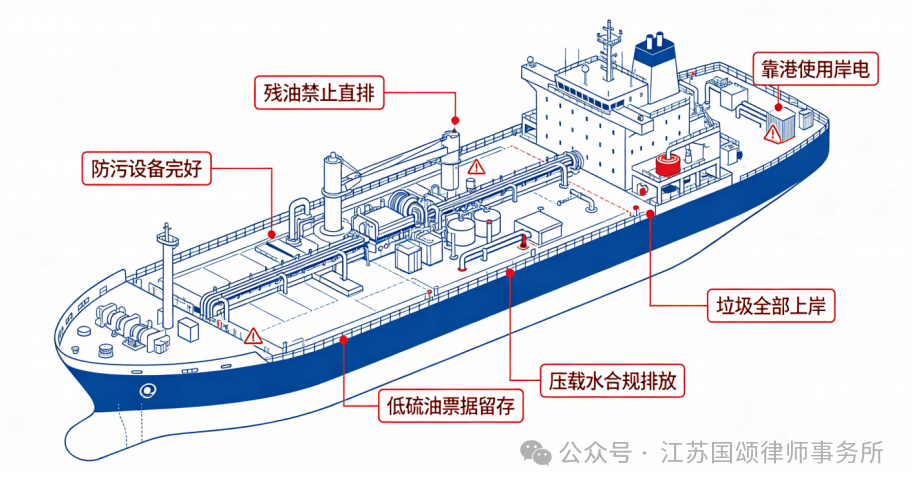
✅ 红线1:设备+台账,缺一不可
✅ Red Line 1: Both equipment and records must be in order
• 油水分离器、生活污水处理装置、压载水系统必须正常运转,严禁私改、关停;
Oily-water separators, sewage-treatment plants and ballast-water management systems must remain fully operational. Unauthorised modification or shutdown is strictly prohibited.
• 所有记录簿在船、有效、实时填写;
All statutory record books must be valid, kept on board and completed contemporaneously.
• 内河小船和远洋大船都应按各自适用标准做好记录;台账缺失或前后矛盾,可能成为认定非法排污的重要不利证据。
Small inland-water vessels and large ocean-going ships must each keep records to the standards applicable to them. Missing or inconsistent records may constitute significant adverse evidence of an unlawful discharge.
⚠️ 漏记、造假,最低罚5000元起步。
⚠️ Missing or falsified entries can trigger fines starting at RMB 5,000.
✅ 红线2:水体零排放,一滴脏水都不准直排
✅ Red Line 2: Zero direct discharge — not a drop of contaminated water into the waterway
• 残油、洗舱水、油泥→必须交有资质单位回收,留好单据;
Oil residues, tank-washing water and oily sludge must be delivered to a properly qualified reception contractor. Retain every receipt and transfer document.
• 内河及港口禁止未经处理排放生活污水;
Untreated sewage must not be discharged in inland waters or ports.
• 塑料、油抹布、垃圾→统一上岸,严禁抛江;
Plastics, oily rags and garbage must be landed ashore through proper channels. Never throw them into the water.
• 压载水违规排放,可能面临2万至20万元罚款(具体以适用法律法规为准)。
A non-compliant ballast-water discharge may attract a fine of RMB 20,000–200,000, subject to the laws and regulations applicable in the circumstances.
✅ 红线3:靠港必须接岸电(有岸电条件时)
✅ Red Line 3: Use shore power while berthed where the applicable conditions are met
• 具备岸电使用条件时,应按适用规定接用岸电;违规可能面临罚款或其他行政处理;
Where shore power is available and the vessel meets the conditions for use, it must connect in accordance with the applicable rules. Non-compliance may lead to fines or other administrative action.
• 低硫燃油加注票据、样品完整留存;
Retain complete bunker delivery notes and samples for compliant low-sulphur fuel.
• 港内作业噪声、尾气管控,必须留痕。
Document all noise-control and exhaust-emission measures taken during port operations.
三、危化品 / 油轮企业:这几条专查你
3. Dangerous-Goods Operators and Oil Tankers: Expect Particular Scrutiny
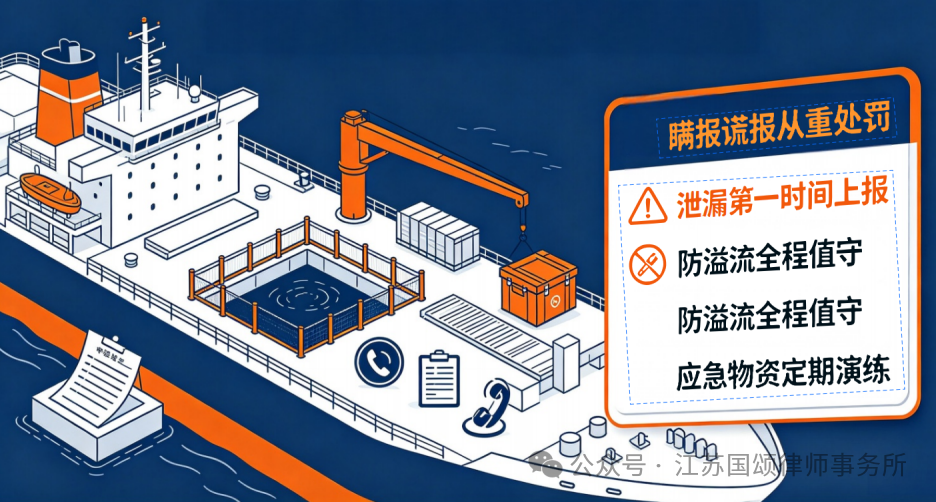
✅ 红线4:危化品 / 油轮作业,申报、围控、应急缺一不可
✅ Red Line 4: Dangerous-goods and tanker operations require accurate declarations, effective containment and full emergency readiness
• 进出港、过驳、洗舱,货物毒性、污染风险必须如实申报,瞒报可能面临处罚(具体以适用法律法规为准);
For port entry and departure, ship-to-ship transfer and tank cleaning, the cargo’s toxicity and pollution risks must be declared truthfully. Concealment may be penalised under the applicable laws and regulations.
• 甲板、管系、货舱防渗漏围挡必须到位,装卸期间专人值守;
Decks, piping systems and cargo spaces must have effective leak-prevention and containment arrangements. A designated person must remain on watch throughout cargo operations.
• 围油栏、吸油材料、消油剂配齐且有效,缺一项都可被责令停航;
Oil booms, sorbents and approved dispersants must be complete, serviceable and within their shelf life where applicable. Missing equipment may result in the vessel being ordered to suspend operations.
• 泄漏后应第一时间向海事、生态环境等有关部门报告;迟报、漏报可能导致从重评价,并显著增加生态修复及第三方损失承担风险。
Report any leak immediately to the maritime authorities, the ecology and environment authorities and other competent agencies. Late or incomplete reporting may be treated as an aggravating factor and can materially increase exposure to ecological-restoration costs and third-party claims.
四、码头、修拆船企业:别在这些地方“省钱省事”
4. Terminals and Ship Repair or Dismantling Businesses: Do Not Cut Corners Here
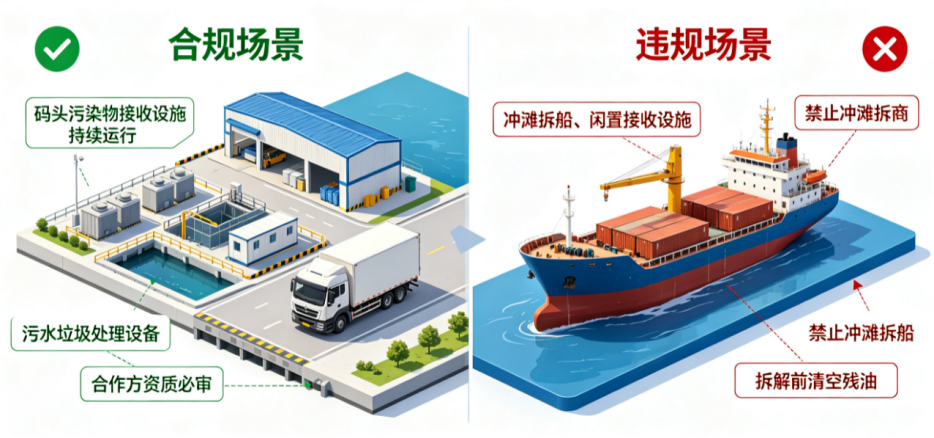
✅ 红线5:码头与第三方服务商,设施和资质必须双合规
✅ Red Line 5: Terminals and third-party providers need both compliant facilities and proper qualifications
• 码头必须持续运行污水/垃圾/残油接收设施,容量不足或闲置→2万~20万;
Terminals must keep reception facilities for sewage, garbage and oil residues in continuous operation. Insufficient capacity or idle facilities may attract fines of RMB 20,000–200,000.
• 洗舱、回收服务商必须持证,无资质合作=共同违法;
Tank-cleaning and waste-reception providers must be properly licensed. Working with an unqualified provider may expose both parties to liability.
✅ 红线6:修拆船作业,严禁冲滩和污染物入水
✅ Red Line 6: Ship repair and dismantling — no beaching and no pollutants entering the water
冲滩拆船,绝对禁止——违者10万~100万,拆前必须清空残油和危化品,废弃物严禁入水。
Dismantling a vessel by beaching is strictly prohibited and may attract fines of RMB 100,000–1 million. All residual oil and hazardous chemicals must be removed before dismantling, and no waste may enter the water.
五、3大法律“雷区”,踩中任何一个都足以让企业伤筋动骨
5. Three Legal Danger Zones — Any One Could Seriously Damage the Business
|
风险类型 Type of Exposure |
后果 Potential Consequences |
|
行政责任 Administrative |
高额罚款 + 船舶扣押 + 停业整顿 Substantial fines + vessel detention + suspension of operations pending rectification |
|
民事赔偿 Civil Liability |
生态修复、鉴定评估全额承担;恶意排污/瞒报事故 → 丧失责任限制,无限赔偿 Full cost of ecological restoration, expert appraisal and assessment; deliberate unlawful discharges or concealment may lead to loss of limitation and uncapped damages |
|
刑事追责 Criminal Liability |
排污有毒物质、引发重大水污染事故 → 实际控制人、船长可涉污染环境罪 Discharging toxic substances or causing a major water-pollution incident may expose the de facto controller and the master to criminal liability for environmental pollution |
六、律师给出7天落地整改清单(照做就能避险)
6. Counsel’s Seven-Day Compliance Remediation Plan
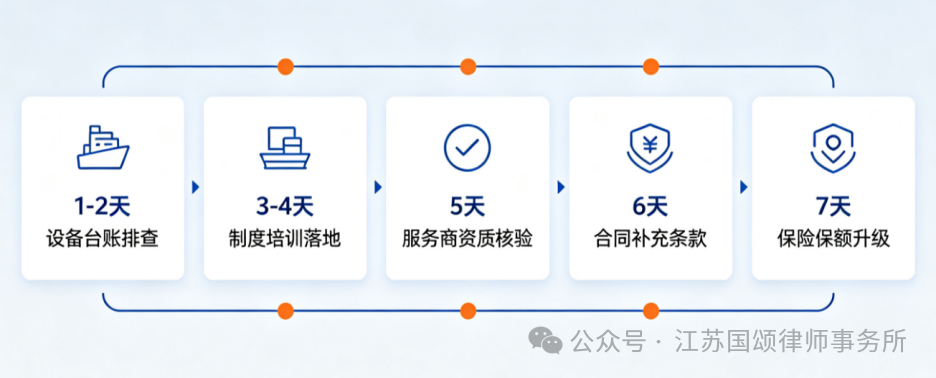
📅第1~2天:全船队逐船“过筛子”
📅 Days 1–2: Screen Every Vessel in the Fleet
• 核验所有防污设备运行状态、证书有效期;
Verify the operating condition of all pollution-prevention equipment and the expiry dates of all certificates.
• 复核近3个月全部记录簿(油类、污水、垃圾、压载水);发现缺失、迟记或涂改问题,应如实说明并立即整改,严禁倒签、虚构操作;
Review all oil, sewage, garbage and ballast-water record books for the previous three months. Any missing, late or altered entry must be explained truthfully and rectified immediately. Never backdate an entry or fabricate an operation.
• 统一归档燃油票据、回收凭证、岸电使用记录。
Centralise and standardise the filing of bunker documents, waste-reception receipts and shore-power records.
📅第3~4天:制度上墙 + 全员培训
📅Days 3–4: Post the Procedures and Train All Personnel
• 发布船舶环保管理细则,明确各岗位环保职责;
Issue detailed vessel environmental-management procedures that clearly allocate responsibilities to each position.
• 组织全体船员学习法典要点,培训记录 + 考核签字留存;
Train all crew on the Code’s key requirements and retain the training records and signed assessment results.
• 建立污染事故24小时上报流程,张贴在驾驶台和机舱。
Establish a 24/7 pollution-incident reporting protocol and post it on the bridge and in the engine room.
📅第5天:清查所有合作方资质
📅Day 5: Audit Every Service Provider
• 核实港口、回收商、洗舱单位、拆船厂资质;
Verify the qualifications of the ports or terminals, waste-reception contractors, tank-cleaning providers and ship-dismantling yards used by the fleet.
• 淘汰无证或过期服务商;
Remove unlicensed providers and providers with expired qualifications from the approved-provider list.
• 拆解合同中明确禁止冲滩 + 污染损失追偿条款。
In ship-dismantling contracts, expressly prohibit beaching and include recourse provisions for pollution losses.
📅第6天:合同条款“补漏”
📅 Day 6: Close the Contractual Gaps
• 租船合同、货运协议、码头作业合同新增环保责任划分条款;
Add clear allocations of environmental responsibility to charterparties, contracts of carriage and terminal-operation agreements.
• 明确船员违法排污的追偿机制;
Establish a clear recourse mechanism for unlawful discharges by crew members.
• 约定污染事故保险兜底责任。
Specify responsibility for maintaining insurance as a financial backstop for pollution incidents.
📅 第7天:保险保额“加码”
📅 Day 7: Reassess and Increase Insurance Limits
• 对照法典实施后的主要风险,复核并合理提高油污损害责任险等保险保额,重点覆盖清污、生态修复和第三方索赔;同时核对行政罚款、故意违法等除外责任,不能笼统理解为“保险覆盖全部处罚”。
Review the principal risks arising under the Code and, where appropriate, increase the limits under oil-pollution liability and related policies, with particular attention to clean-up costs, ecological restoration and third-party claims. Check exclusions for administrative fines and deliberate violations as well: insurance should never be assumed to cover every penalty.
七、最后说几句
7. A Final Word
《生态环境法典》不是“纸老虎”。
它把过去分散、模糊、可通融的环保要求,变成了清晰、统一、不可商量的法律义务。
The Environmental Code is no paper tiger.
It turns environmental requirements that were once fragmented, vague or open to accommodation into clear, consistent and non-negotiable legal obligations.
今天起,每一份记录、每一次排放、每一个合作方,都在法律放大镜下。
与其等罚单上门,不如现在就拿着文末的自查表,一条一条过。
Ever since, every record, every discharge and every contractor is under a legal microscope.
Rather than wait for a penalty notice, take the checklist at the end of this article and work through it now, item by item.
如果您的企业正在或即将接受海事调查、环保处罚、生态诉讼,建议第一时间委托专业海商事律师介入,参与听证、复议和诉讼,把损失降到最低。
If your company is facing, or expects to face, a maritime investigation, environmental enforcement action or ecological or environmental litigation, involve specialist maritime counsel as early as possible. Timely representation in hearings, administrative reconsideration and litigation can help minimise the loss.
特别说明:本文为一般性合规提示,不构成针对具体事项的正式法律意见。应结合船型、航区、吨位和作业场景具体判断。
Notes: This article provides general compliance guidance only and does not constitute formal legal advice on any specific matter. The analysis must take account of the vessel type, trading area, tonnage and operational circumstances.


